
Portal Crane Structure

It generally consists of the following parts:
Structural Section
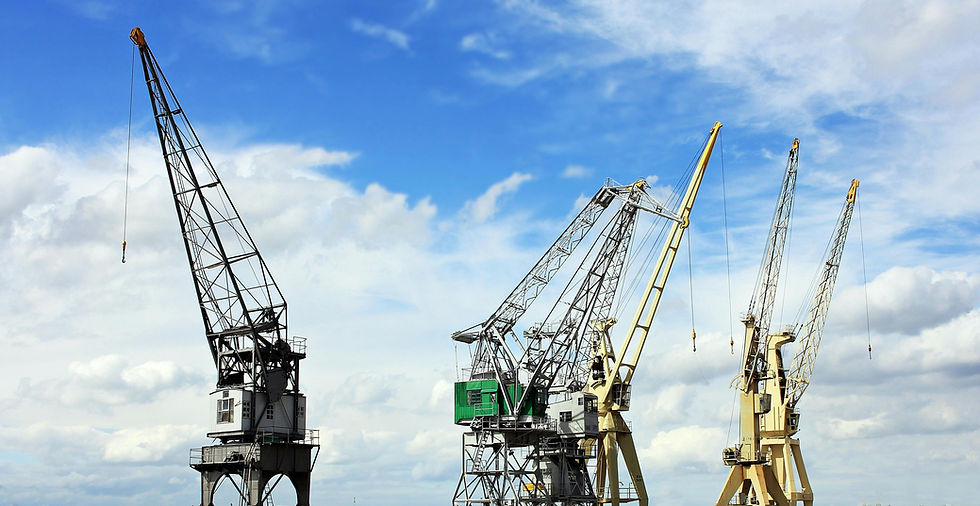
Includes the boom system, herringbone, rotating platform, operator's cab, and gantry.
Mechanical Section
Includes the hoisting mechanism, luffing mechanism, rotating mechanism, and running mechanism.
Electrical Section
Crane power is generally supplied by a cable drum or underground cable, using direct electric drive. Only when electric power is unavailable is a combined drive system such as steam or diesel generators considered. The electrical section generally includes wires and cables, a central collector, motors, transformers, resistors, control cabinets, operating consoles, and lighting.
Safety Devices
Includes limiters, overload limiters, buffers, and wind and anti-slip devices. Large portal cranes with cabs and machine room platforms exceeding 20 meters should consider installing a simple elevator.
The crane's rotating mechanism is mounted on the base of a portal crane. The gantry base is effectively the load-bearing part of the crane. Beneath the gantry is a traveling mechanism that travels on ground-mounted tracks. Above the rotating mechanism are the hoisting mechanism's boom and luffing mechanism. These four mechanisms work together to install equipment or ship sections, or to load and unload cargo.
Trains and vehicles can pass beneath the gantry. Depending on requirements, the gantry crane should be designed during construction to accommodate one, two, or three trains. The track gauges for portal cranes accommodating one, two, or three trains are 6m, 10.5m, and 15m, respectively. Portal cranes are typically powered by an external power grid via flexible cables, with the larger mechanisms generally driven separately by three-phase induction motors.
Portal cranes have hoisting, slewing, luffing, and running mechanisms. The first three mechanisms are mounted on the rotating mechanism and participate in every operation. The rotating mechanism also features a tilting single or combined boom and a driver's cab. The traveling mechanism, mounted beneath the gantry, adjusts the crane's operating position. Portal cranes with buckets are also equipped with additional equipment such as telescopic funnels and belt conveyors to improve the productivity of portal cranes when loading and unloading bulk materials with grab buckets. In addition to electrical protection devices, they are also equipped with safety devices such as lifting capacity or lifting torque limiters and crane rail clamps.


Comments